Powering AI processors – 48V vertical power delivery changes the game
AI models demand huge current, driving legacy multiphase designs past 50 phases—causing space, thermal, and control limits Vicor addresses


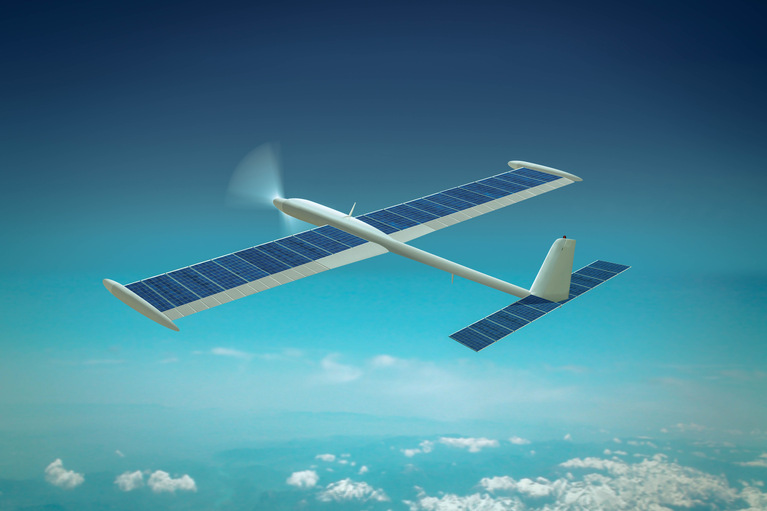
Case study: Inspection UAVs

This class of UAV depends on solar power to meet its long flight time requirements. Solar power systems rely on the use of maximum powerpoint tracking (MPPT) circuitry to ensure that solar energy is harvested at the optimum voltage before conversion to a voltage suitable for charging a secondary battery, or delivery to the power system’s intermediate bus network. The key goals were:
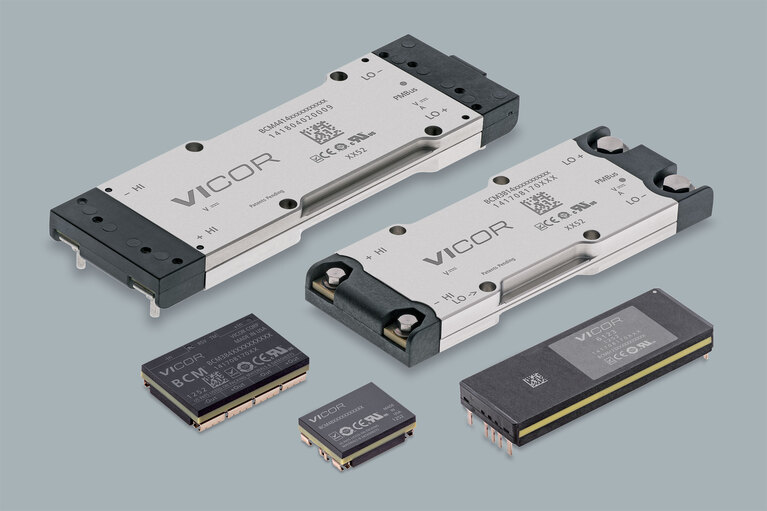
As this class of UAVs develops, high-efficiency power-conversion topologies such as Zero-Voltage Switching and Zero-Current Switching (ZVS/ZCS) which are used in Vicor BCMs® are important to enable the widening variety of fuel sources and applications with increasing power challenges.

Efficiently convert high voltages to SELV

Lightweight power delivery network
Wide input range at point-of-load conversion
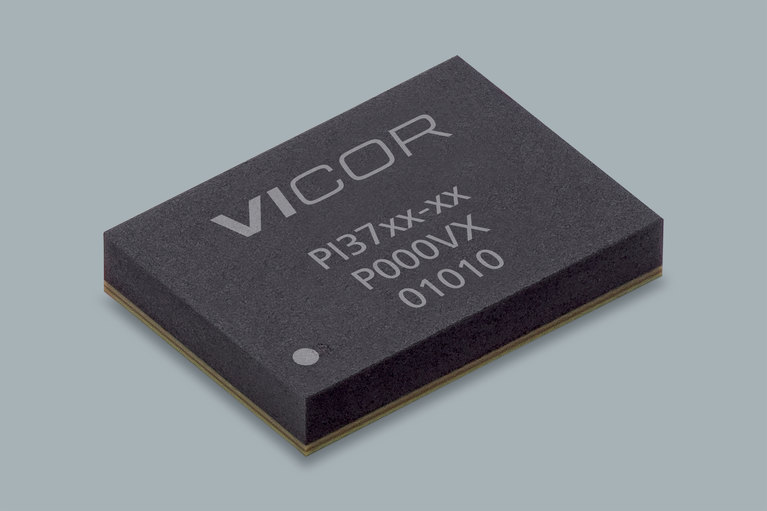
A combination of the BCM6123 providing the isolated conversion of the 350V to a 48V intermediate bus and the PI3741 ZVS Buck-Boost regulator with a very wide range input voltage operating capability provides a tightly regulated 28V output for various UAV loads.

絶縁 電圧変換比固定
入力電圧: 36 – 800V
出力電圧: 2.4 – 55.0V
出力電流: 最大150A
ピーク効率: 98%
22.0 x 16.5 x 6.7mm 他
Powering AI processors – 48V vertical power delivery changes the game
AI models demand huge current, driving legacy multiphase designs past 50 phases—causing space, thermal, and control limits Vicor addresses
Innovative 48V AI power architecture delivers both high current density and high current gain
Vicor 48V Factorized Power Architecture slashes thermal losses and delivers high current density to meet the extreme power demands of AI processors
48V Factorized Power Architecture™ slashes thermal losses and outperforms multiphase approach when powering AI
AI hardware faces severe power and cooling limits. Engineers debate 48V vs. 6V intermediate buses alongside new vertical power delivery (VPD) structures
Betterfrost: Putting on the heat
Betterfrost uses a 48V module for pulsed, conductive glass heating, clearing ice in under 80 seconds while cutting start-up defrost energy by 95%