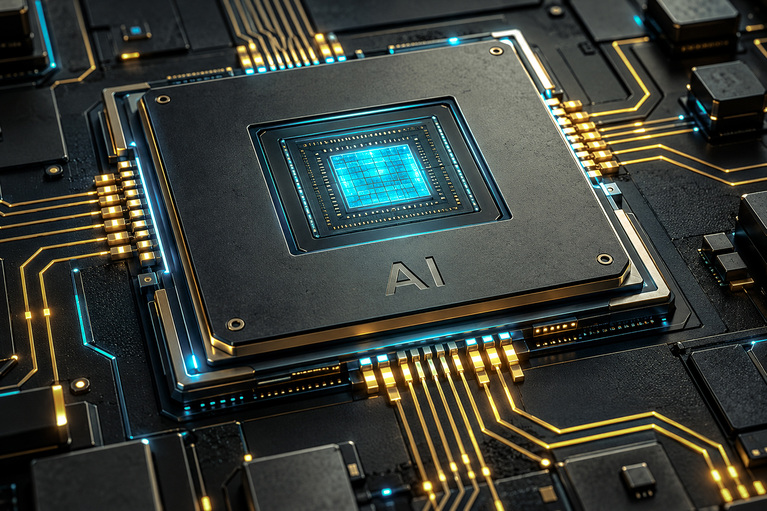
Powering AI processors – 48V vertical power delivery changes the game
AI models demand huge current, driving legacy multiphase designs past 50 phases—causing space, thermal, and control limits Vicor addresses


Discover why more power-efficient systems are essential in the design of tomorrow’s electric vehicles. Listen to the podcast.
Podcast with Alix Paultre, Electronic Design, and Greg Green, Director of Automotive Marketing, Vicor
In this episode of Inside Electronics, we talk about the importance of sophisticated and efficient power systems in the designing the next generation of electric vehicles (EVs). We also addressed the equally important charging infrastructure that will be needed.
Today’s EVs are being infused with a host of cutting-edge technology, from AI to wide-bandgap semiconductors. In turn, the supporting power electronics must be as advanced as the systems they’re driving.
Innovative vehicle electrification solutions have accelerated the evolution of automotive system design. Added features that increase the operational power demands will thus influence how designers source power for various in-vehicle systems.
Powering AI processors – 48V vertical power delivery changes the game
AI models demand huge current, driving legacy multiphase designs past 50 phases—causing space, thermal, and control limits Vicor addresses
Innovative 48V AI power architecture delivers both high current density and high current gain
Vicor 48V Factorized Power Architecture slashes thermal losses and delivers high current density to meet the extreme power demands of AI processors
48V Factorized Power Architecture™ slashes thermal losses and outperforms multiphase approach when powering AI
AI hardware faces severe power and cooling limits. Engineers debate 48V vs. 6V intermediate buses alongside new vertical power delivery (VPD) structures
Betterfrost: Putting on the heat
Betterfrost uses a 48V module for pulsed, conductive glass heating, clearing ice in under 80 seconds while cutting start-up defrost energy by 95%