
Betterfrost: Putting on the heat
Betterfrost uses a 48V module for pulsed, conductive glass heating, clearing ice in under 60 seconds while cutting start-up defrost energy by 95%


Discover why more power-efficient systems are essential in the design of tomorrow’s electric vehicles. Listen to the podcast.
Podcast with Alix Paultre, Electronic Design, and Greg Green, Director of Automotive Marketing, Vicor
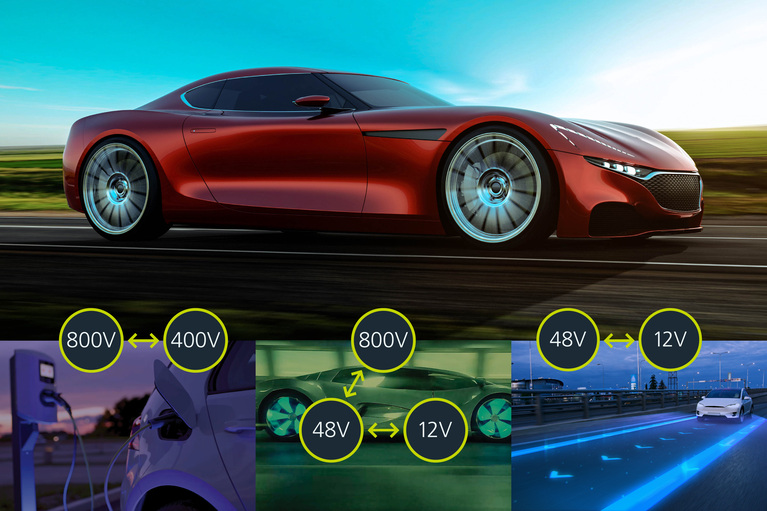
In this episode of Inside Electronics, we talk about the importance of sophisticated and efficient power systems in the designing the next generation of electric vehicles (EVs). We also addressed the equally important charging infrastructure that will be needed.
Today’s EVs are being infused with a host of cutting-edge technology, from AI to wide-bandgap semiconductors. In turn, the supporting power electronics must be as advanced as the systems they’re driving.
Innovative vehicle electrification solutions have accelerated the evolution of automotive system design. Added features that increase the operational power demands will thus influence how designers source power for various in-vehicle systems.
Betterfrost: Putting on the heat
Betterfrost uses a 48V module for pulsed, conductive glass heating, clearing ice in under 60 seconds while cutting start-up defrost energy by 95%
Betterfrost harnesses 48V in EVs for record-setting windshield defrosting and to extend winter range
Betterfrost’s 48V power control module uses conductive pulsed heating to defrost EV glass in under 60 seconds, saving energy and preserving winter range
Powering AI at scale
Maury Wood appears on Electronic Specifier podcast explaining the challenges of powering AI and unveiling the trends toward wafer-scale processors
INFAC bolsters EV range by packing more power into the battery pack
INFAC integrates the DC-DC converter into EV battery pack to leverage cooling system and save space. 48V power dense modules help downsize cable and connectors to boost range.