Vicor vertical power delivery

The highest compute density and PUE performance

Icon image of a ruler used to represent high density

High current density

Icon image of a speaker used to represent low noise

High efficiency

Image of a mountain icon being used to represent rugged and reliable

48V centric

Scaling to power next-generation AI processors

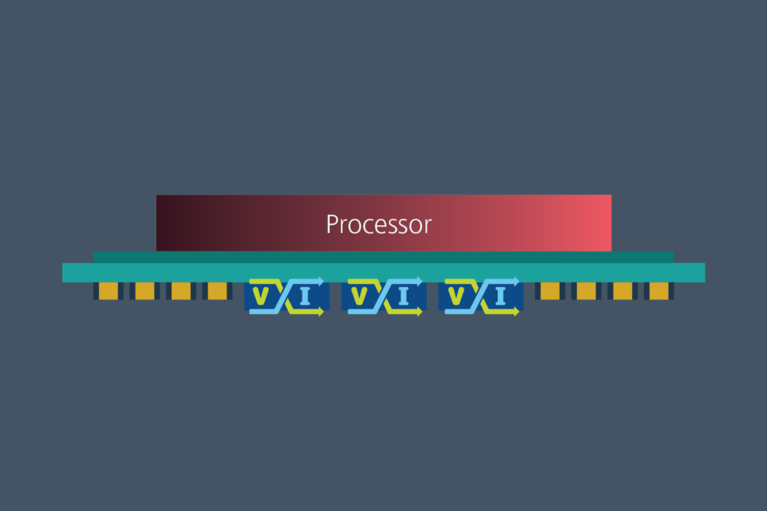
Powering AI processors is not a simple power delivery design exercise; it is the most formidable power engineering challenge of our time. The conventional multiphase voltage regulation approach has technical shortcomings with critically important power system attributes for high power loads: current gain and current density. Vicor addresses critical power delivery bottlenecks for high-performance AI processors with 48V-centric factorized vertical power delivery with current multiplication, minimizing the thermal losses across the very high current power chain.

Maximizing data center FLOPS/watt and tokens/second/watt performance

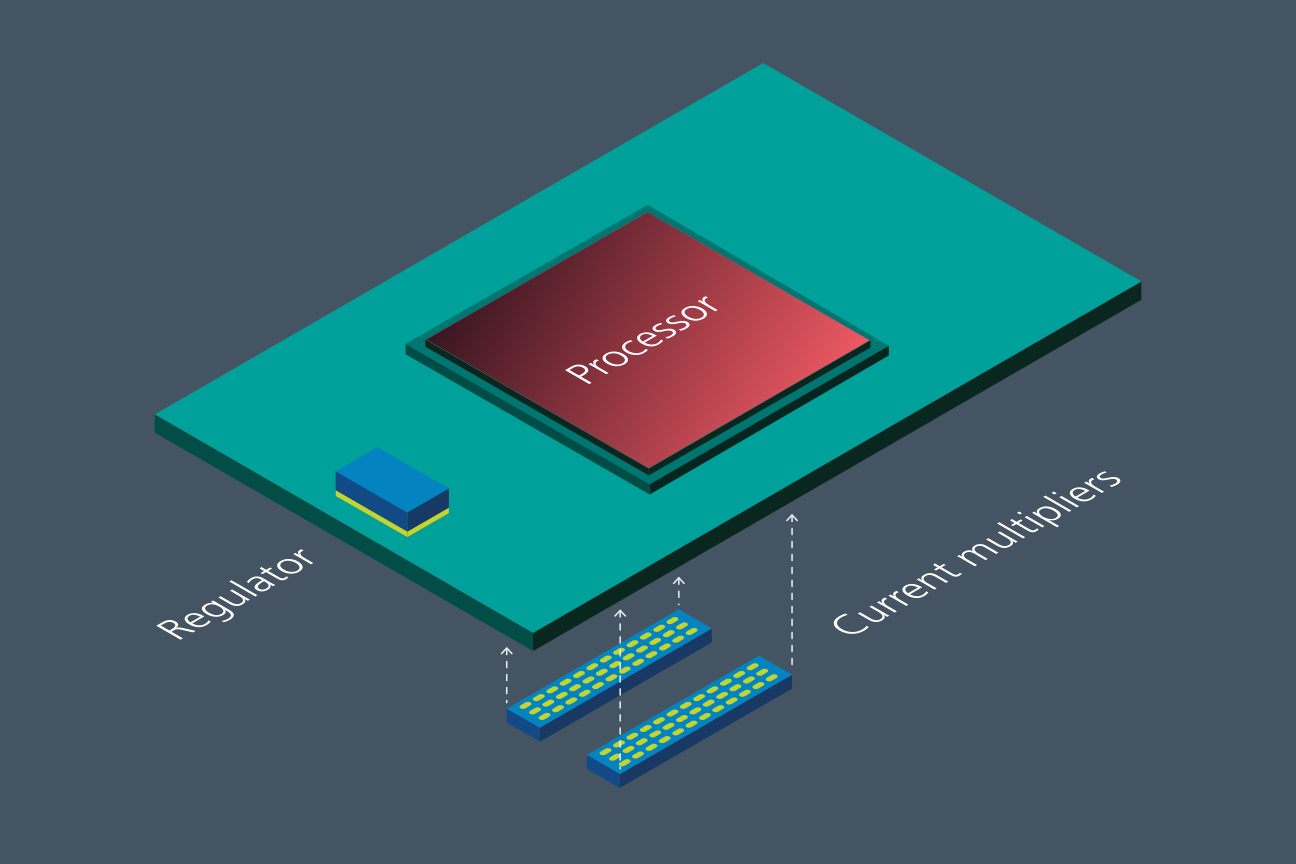
The conceptual underpinnings of Vicor vertical power delivery are quite straightforward but the design innovation in simultaneously achieving both high current density and high current gain are significant. A Factorized Power Architecture (FPA™) separates DC-DC power conversion into two functional stages — regulation followed by voltage transformation using current multipliers. Vicor brings 48V to the processor point-of-load, enabling no compromise VPD, optimizing overall data center Power Usage Effectiveness (PUE) and maximizing data center compute density measured in FLOPS per watt for training workloads and tokens/second/watt for inferencing.

A unique architecture with significant reduction in distribution power loss

48V direct-to-load power delivery

A 48V power delivery network has four times less current than a 12V PDN and eight times less than a 6V PDN. As Ohm’s law dictates, the current is reduced to a manageable level and the reduction in power loss is significant.

Current multiplication at the point-of-load

The transformation stage is implemented with a current multiplier at the point-of-load, which divides the regulated 48V factorized bus by a K factor (K = 48) which yields a 1V nominal AI processor supply rail with unprecedented current gain.

Industry-leading current density and current gain

Current densities of greater than 3.0A/mm² and current gains of greater than 40 enable best-in-class vertical power delivery. Without the high levels of both of these specifications, tradeoffs must be made which lead to significantly higher power losses.

High transient response rate

Vicor power modules perform with best-in-class transient response enabled by a very high bandwidth proprietary control loop that utilizes the unique characteristics of the current multiplier.

Thermally adept, ultra-thin packaging

Vicor current multipliers are 1.5mm thin and have a thermal resistance of 0.3°C/W, easing the significant mechanical and thermal challenges brought on by the local concentration of heat under the processor.

Low output voltage ripple

Low output voltage ripple enables AI processors to avoid dynamic voltage and frequency scaling which detrimentally throttles compute performance.

More about Vicor vertical power delivery

Article

Running in the right direction with 48V for AI processor power

As demand for AI processor power soars, everyone is seeking the best approach to power it. The answer is simpler than you might think – just look to I2R.

AI power challenges
Partner podcast

Addressing the AI power challenge in data center

With GPU servers drawing more and more power, the challenge is to provide this increased power capacity with minimal loss, noise or downtime.

Article

Powering AI processors using a 48V Factorized Power Architecture

48V Factorized Power Architecture™ overcomes traditional multiphase limitations and drastically cuts I2R thermal losses for high-demand loads

current multipliers powering AI processors
Article

Current multipliers: The obvious choice for powering AI processors and other demanding applications

AI processors need to handle low-voltage, high-current demand, which can cause power system bottlenecks. Learn how current multiplication can change that.

Solutions for the entire power delivery network

Enabling HVDC distribution

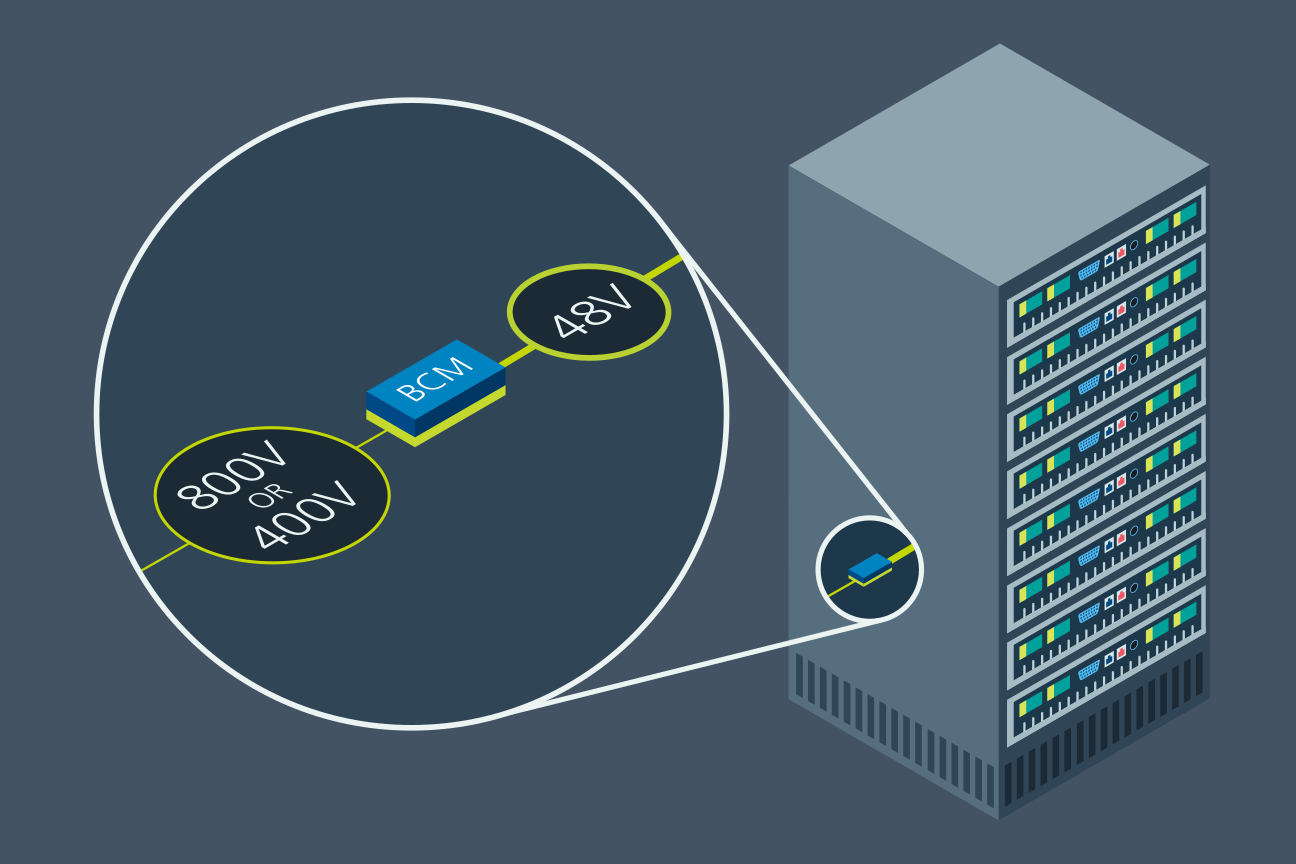
Unlike regulated converters, isolated Vicor BCM® bus converters operate with a fixed K-factor (VOUT = VIN ⋅ K) making it an ideal step-down stage for hyperscale environments where efficiency and power density are paramount when transforming high voltage inputs into a manageable 48V intermediate bus. By converting at the rack or blade level, they enable the use of higher distribution voltages that significantly reduce I2R resistive losses and copper cabling requirements, all while maintaining the galvanic isolation necessary to protect sensitive server components from high-voltage transients.

Bridging 12V and 48V systems

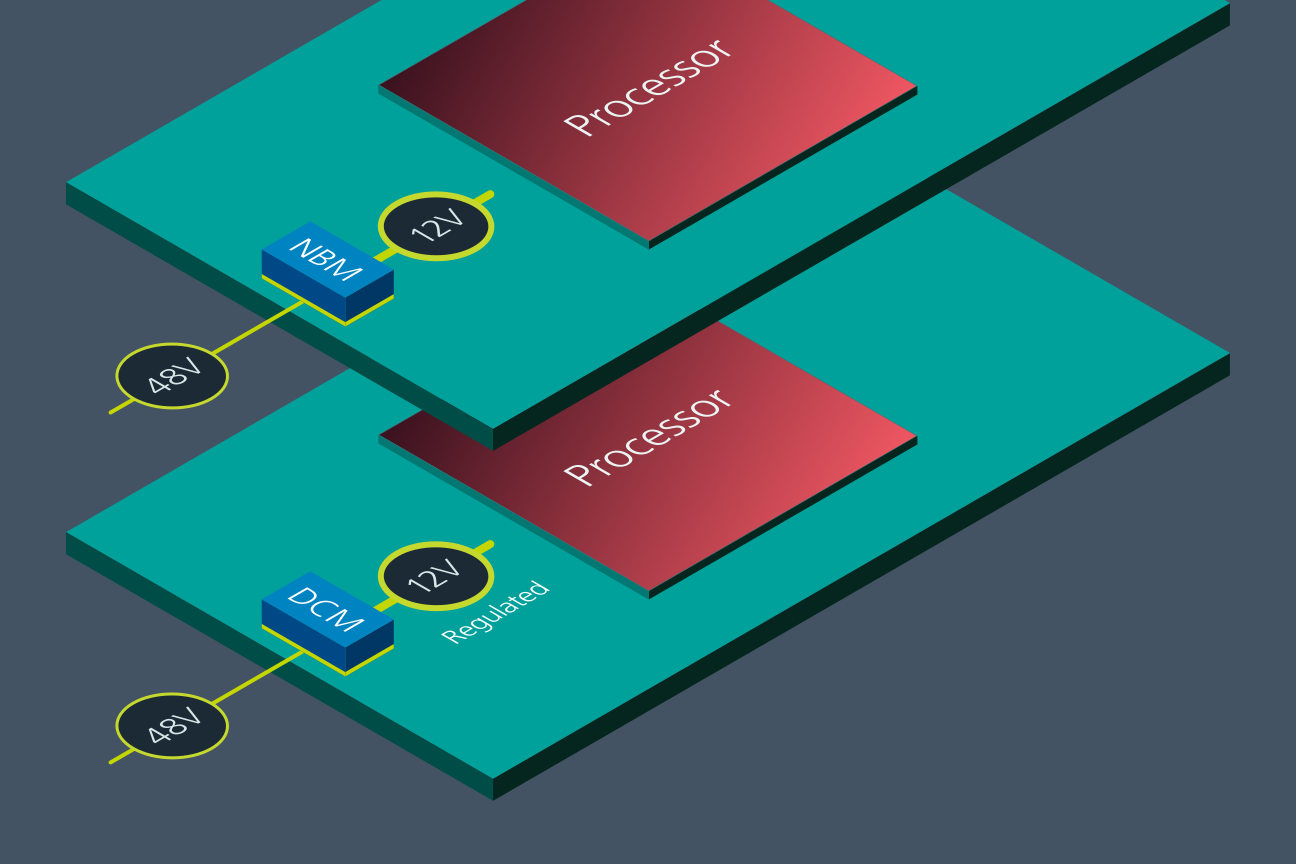
High density, isolated regulated Vicor DCM™ DC-DC converters maintain a stable 12V output across varying 48V input ranges, making them ideal for sensitive legacy components like HDDs and PCIe cards that require tight voltage tolerances. In contrast, non-isolated Vicor NBM™ bus converters operate as a high-efficiency DC transformers with a fixed K-factor (typically 1/4), offering bidirectional capability that allows for both 48V to 12V step-down and 12V to 48V step-up conversions. This versatility enables data centers to integrate modern 48V AI accelerators into existing 12V rack infrastructures or power legacy 12V server blades from a 48V bus and achieving peak efficiencies near 98%.

Power auxiliary loads direct from 48V

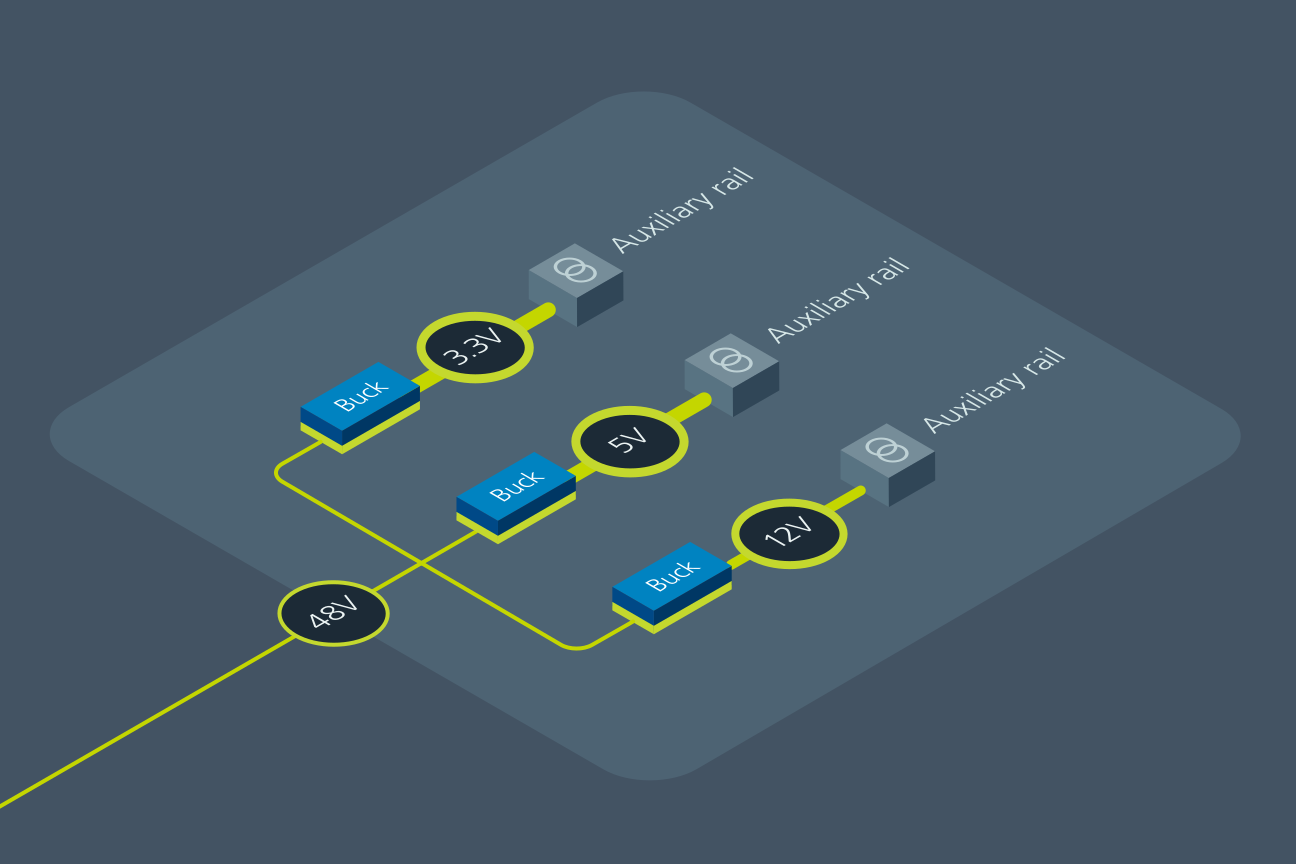
Vicor ZVS buck regulators are specifically designed to convert a 48V distribution bus directly into multiple secondary voltages – including 12V, 5V, 3.3V, and 2.5V – without the need for an inefficient intermediate 12V conversion stage. They provide maximum power density, flexibility and high efficiency to power the diverse constellation of auxiliary power rails a server motherboard requires to function.