
Arrow: Driving the future of industry in robotics, industrial IoT, and intelligent automation seminar 2026
Industry-leading power density and innovative architectures of Vicor power modules for robotics, industrial IoT, and intelligent automation


Burn-in thermal chambers have become increasingly more prevalent as high-reliability end markets require semiconductor ICs that achieve the highest levels of quality, reliability and stability. Just increasing the size and number of power supplies and burn-in systems is not a desirable option because of similar floor space limitations as traditional ATE test systems.
IC performance and complexity have increased in all end markets, particularly the automotive and data center markets where stringent quality and reliability requirements are the norm and zero PPM failure rates are the expectation. To meet these requirements, device burn-in is on the increase. Vicor can help achieve higher burn-in throughput with more compact, modular power solutions to allow for rapid development with reduced test and burn-in cost.
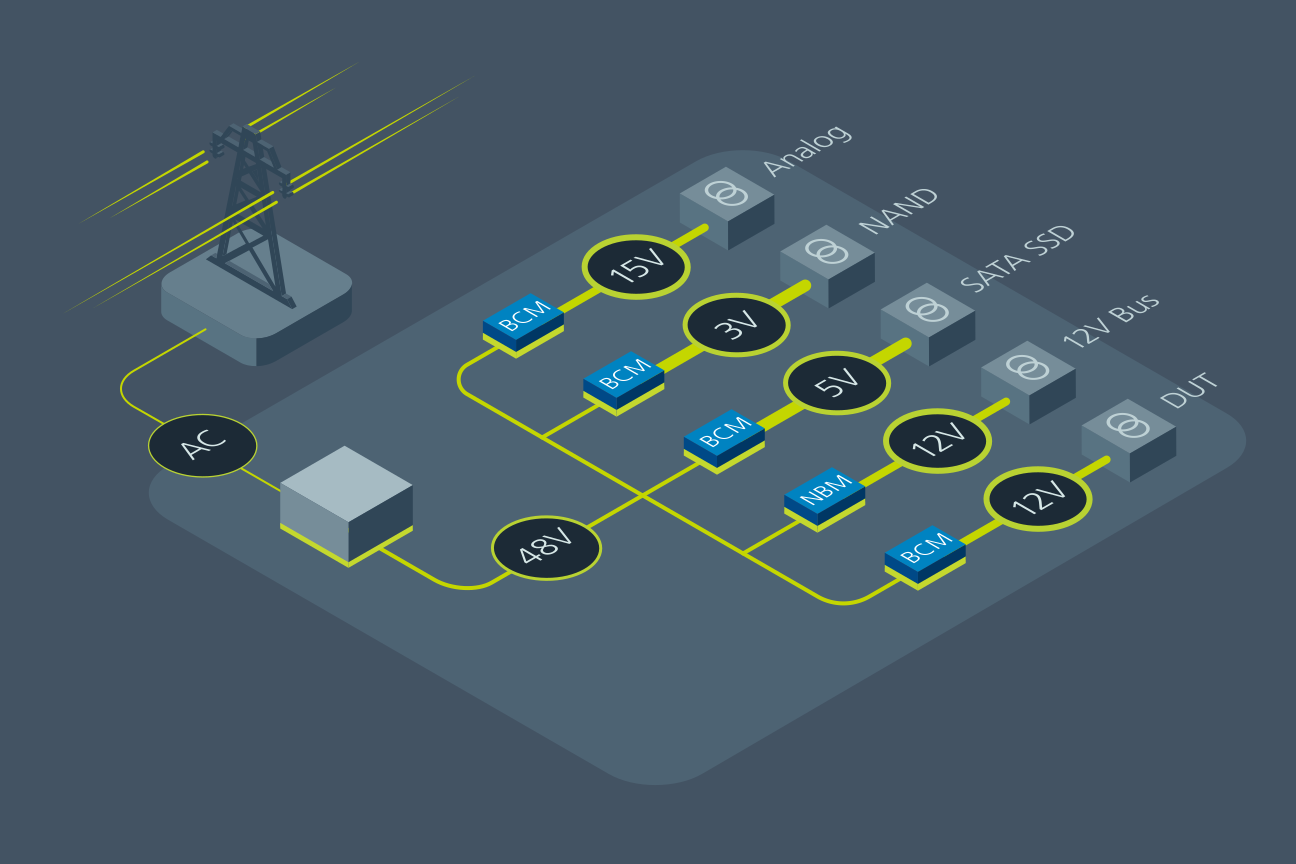
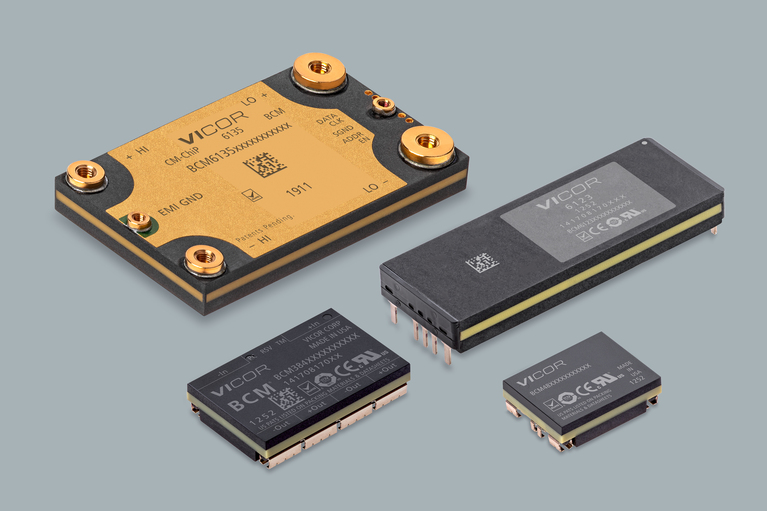
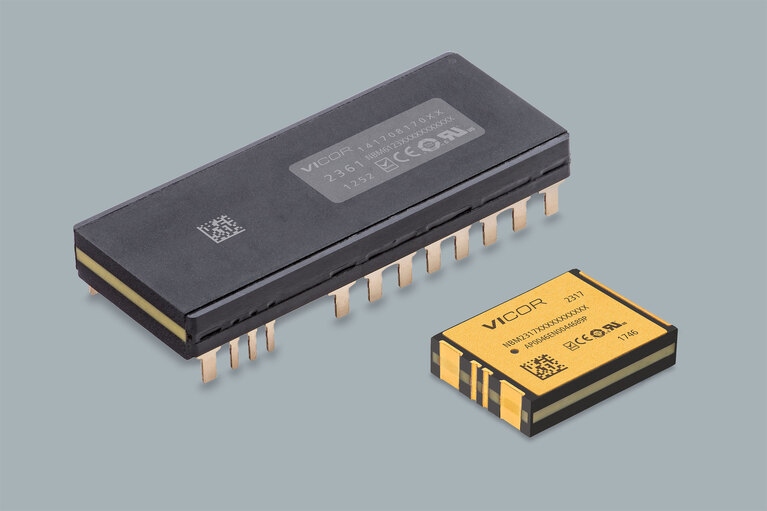
To meet the needs of high power density, high efficiency, and effective thermal management, burn-in equipment benefits from a power delivery network with a 48V distributed bus. Low-voltage Vicor BCMs in full- and half-chip packages perform fixed-ratio conversion with increased power density and current at the load under burn-in stress. The integrated planar magnetics of the BCM provide a low-height profile – typically less than 8mm – to simplify cooling methods and thermal management. Available in a wide range of fixed-ratios, BCMs offer flexibility and modularity to simplify burn-in board development. Another Vicor fixed ratio converter is the NBM series of bidirectional non-isolated bus converters. The NBM series of products is a high efficiency and high power bus converter tailor-made for ATE manufacturers who adopt a distributed 48V bus and who need to provide 12V at high current and with greater than 96% efficiency in small, thermally adept package (as small as 23mm X 17mm X 5.2mm).
Isolated fixed-ratio
Input: 36 – 800V
Output: 2.4 – 55.0V
Current: Up to 150A
Peak efficiency: 98%
As small as 22.0 x 16.5 x 6.7mm
Non-isolated fixed-ratio
Input: 36 – 60V
Output: 7.2 – 15.3V
Power: Up to 2400W
Efficiency: Over 98%
As small as: 23 x 17 x 5.2mm
Arrow: Driving the future of industry in robotics, industrial IoT, and intelligent automation seminar 2026
Industry-leading power density and innovative architectures of Vicor power modules for robotics, industrial IoT, and intelligent automation
Microgate’s out-of-this-world mission requires precision power
Microgate and Vicor power the world's largest telescope! Vicor’s modules deliver 10kW to 5400 actuators, helping Microgate eliminate space image distortion
Revolt is tackling the film industry’s dirtiest production secret - CO2 emissions
ReVolt Fuel tackles the film industry emitting 700k tons of CO2 per year to deliver clean on-set electricity with help of Vicor power modules
11 ways to fine tune your high-voltage-to-48V power conversion
Converting high-voltage to 48V DC slashes cabling costs and weight, significantly boosting energy efficiency across data centers and industrial systems