
Configuring in small spaces
How to fit high-power, multi-rail requirements into nontraditional small-spaced footprints. Learn to break down rails into smaller, paralleled increments.


High power density
High efficiency
Scalable for higher power

Easy thermal management
Vicor high-density modular power conversion is essential in space-constrained designs that require flexibility and scalability. Power modules’ low noise simplifies filter design, and their thermally-adept packaging simplifies thermal management to significantly reduce power losses. The broad Vicor ecosystem of advanced power modules, architecture and topologies simplify the transition to 48V by allowing for quick prototyping and implementation of a complete 48V power delivery network.
The Vicor ecosystem allows you to:
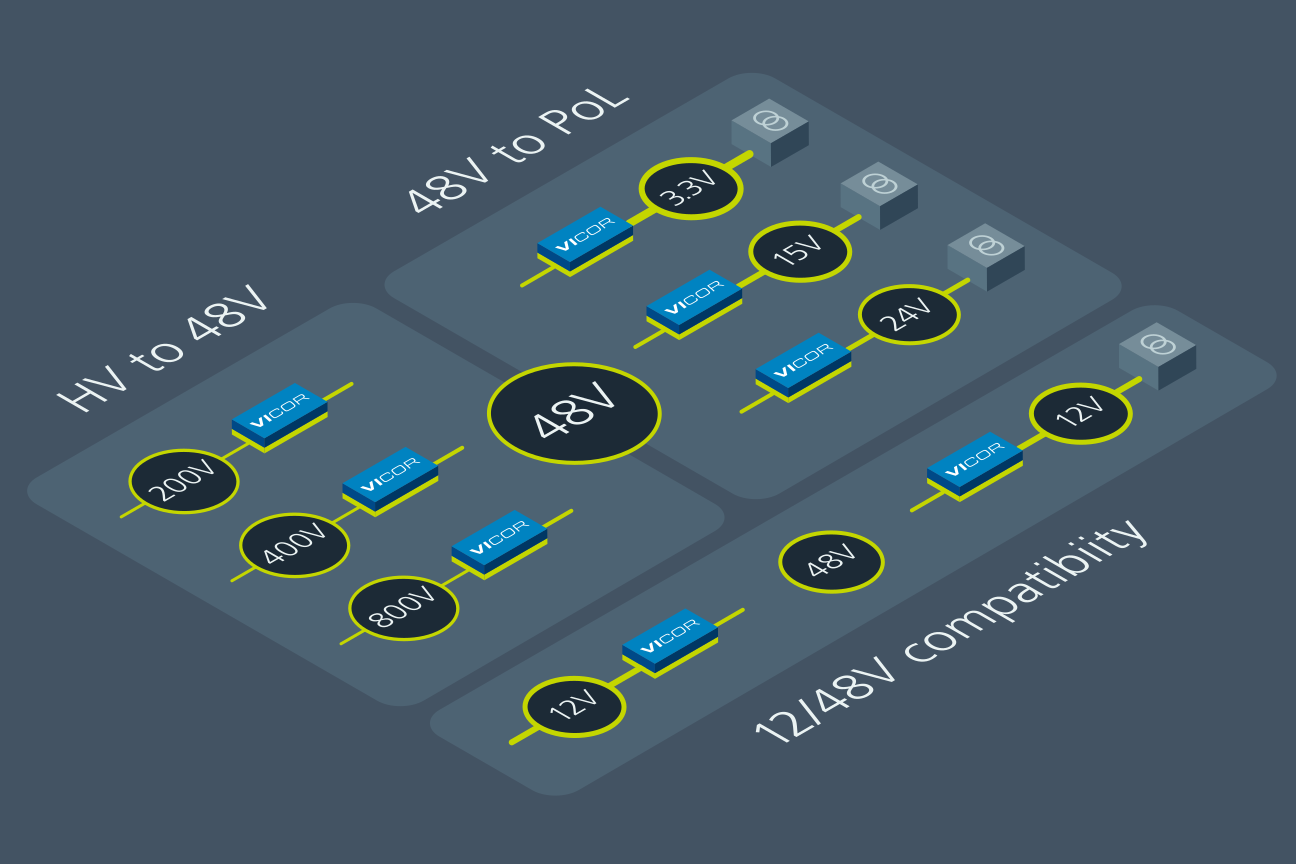
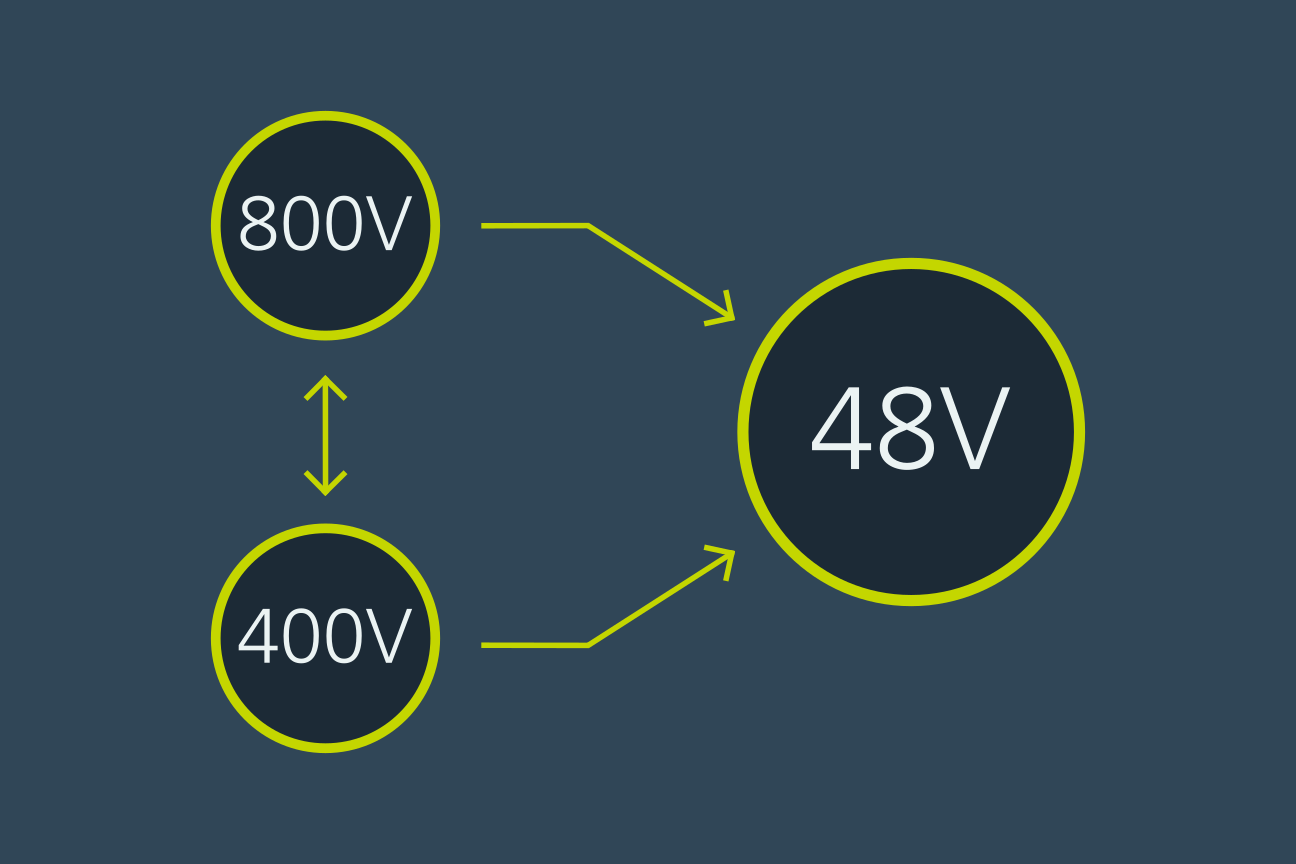
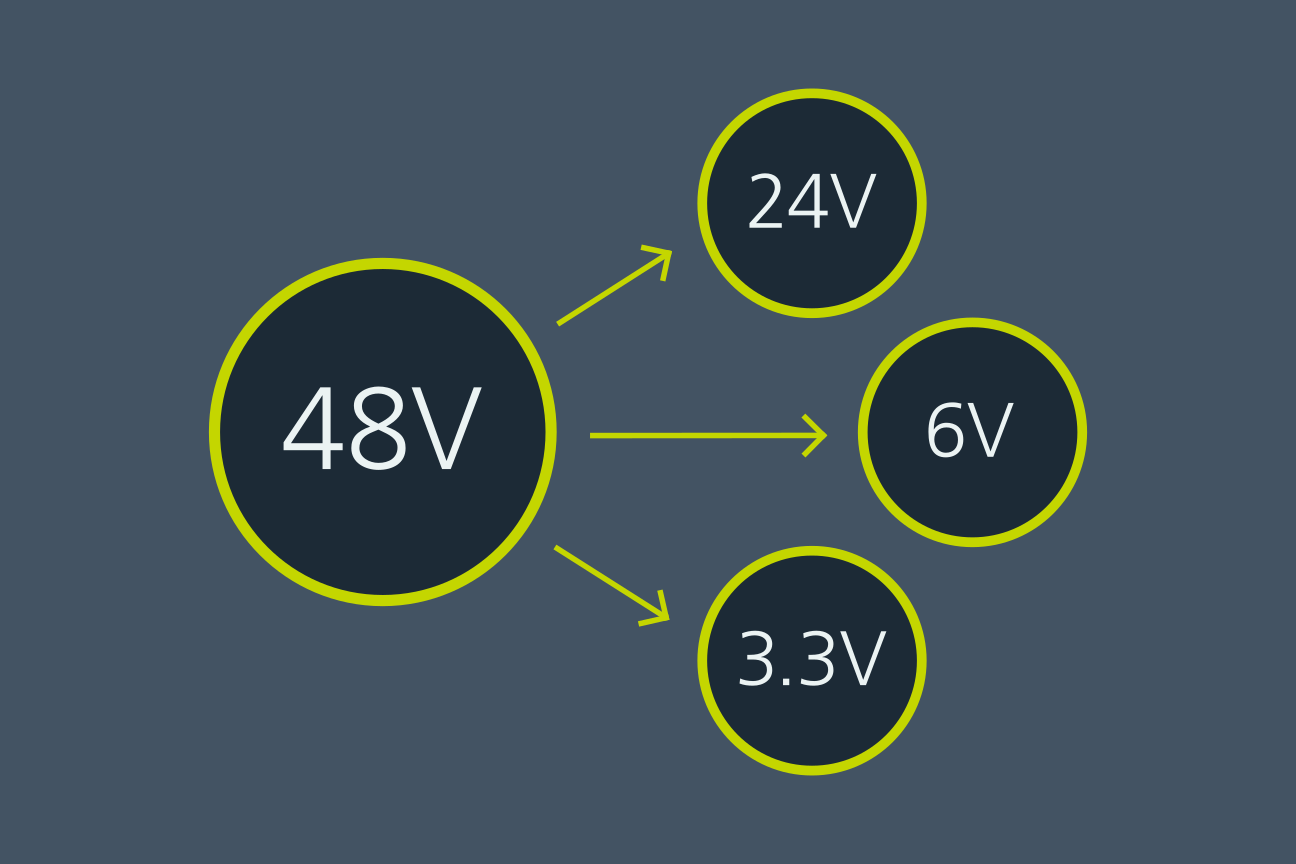
The initial element for power designs is the conversion of rectified AC or high-voltage DC inputs to 48V. Isolated, high-efficiency converters are used to step down from voltages such as 800V or 400V. Industry-leading power density and innovative architectures of Vicor power modules equip power designers with either isolated or non-isolated solutions that reduce the size and weight of power systems and provide the most efficient solution establishing a 48V bus.
48V-to-PoL (point-of-load) converters deliver power to processors, sensors, motors and other points-of-load. Vicor DC-DC modules — buck and buck-boost converters, voltage regulators and fixed-ratio DC-DC converters — provide high power at low voltages, offer fast transient response and precise voltage regulation in compact form factors with superior size and weight performance.
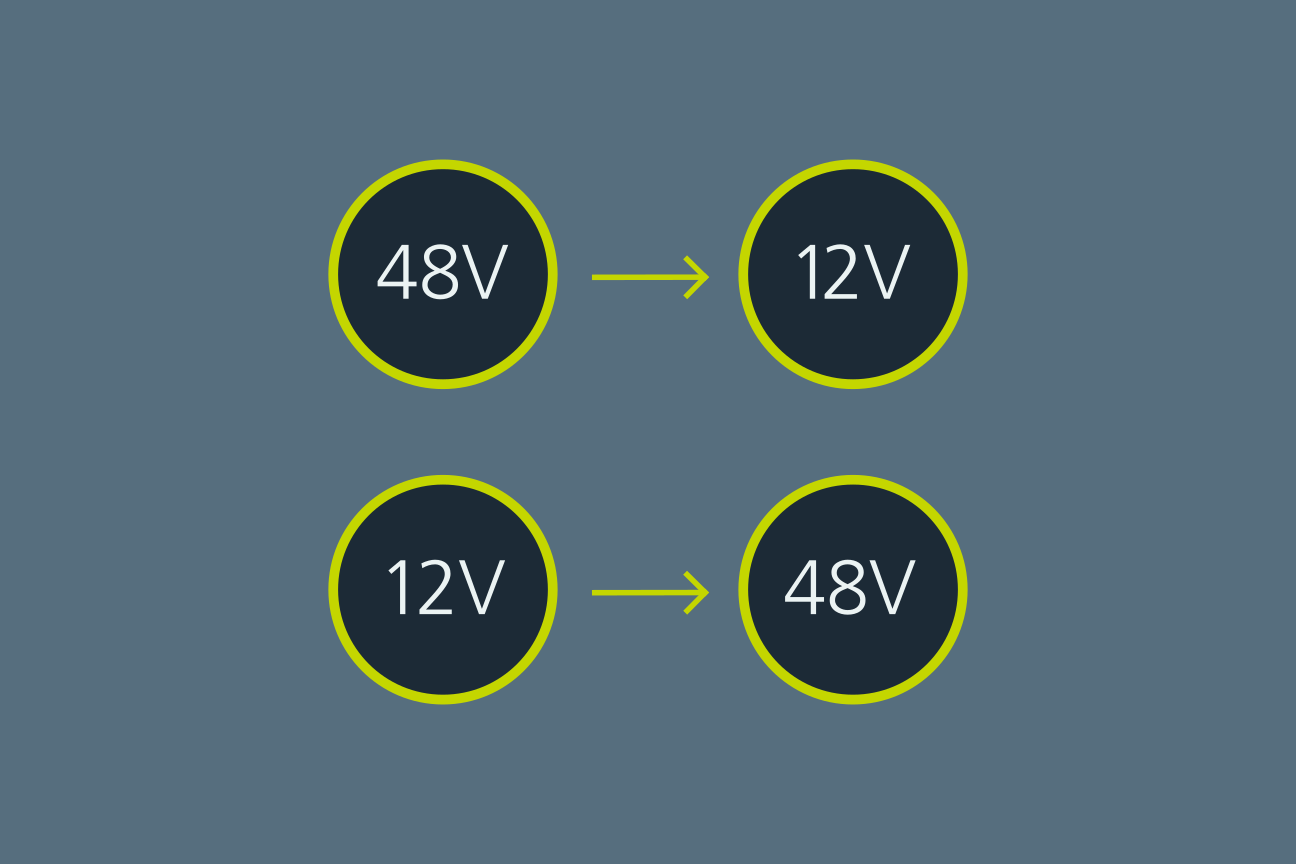
48V and 12V compatibility eases the transition to 48V and allows legacy 12V loads to coexist with new 48V architectures. Vicor bidirectional and conventional converters support gradual upgrades that enable hybrid mixed-voltage environments and compatibility with off-the-shelf components. This alleviates the burden of completely redesigning systems that for decades have been optimized around 12V architectures.
Configuring in small spaces
How to fit high-power, multi-rail requirements into nontraditional small-spaced footprints. Learn to break down rails into smaller, paralleled increments.
Meeting transient needs
Mitigate I²R losses and trace inductance by shifting from lateral layout paths to vertical power placement using advanced multi-phase modules and current multipliers.
Powering high current loads
Explore solutions for delivering thousands of amps to demanding loads. Evaluate traditional constraints like connector pin scaling and cable sizing.
Regulating 48 volts
Learn to deploy non-isolated buck-boost regulators for wide-swing 36V – 60V inputs and implement efficient power regulation using an isolated converter.